Friday, July 23, 2021

New Colleagues and Going Stateside

Hello all! We have great news to share: a new family arrived at the end of June to serve with us here in Bucharest! Here's the backstory.

When we first arrived in October 2012, Jessica and I joined a team of five other families in our city (with other IMB colleagues working with Roma scattered around the country). In July 2019, we became the only IMB unit in Romania.

About that time, Drew and Brooke Tucker (and family) were sensing God's call to come to Romania. Drew found my email address and we began Skyping with the Tuckers about coming with IMB to Bucharest. Drew and Brooke's background is business and education, complementing our gifts well. For example, Drew told me yesterday he worked a side job for five years in sales, a job that forced him to become "comfortable" with striking up conversations with strangers and turning conversations towards specific ends. In the three weeks they've been here, I've seen Drew comfortably talk with neighbors and people in the park. 

We believe they will be a strong witness among Romanians. Whereas Jessica and I came after only having been married one year and used to apartment living, the Tuckers sold their house and cars and downsized to an apartment (with their two small children). Thankfully, their apartment is only minutes away from ours through the park. The Tuckers have now begun language study and are well on their way to getting to know our expat friends and friends from our Romanian church, Biserica Agapia.


Please pray for Drew, Brooke, Emerson, and Lydia Tucker. Please pray for quick adjustments, especially for the kids, and for genuine friendships among both expats and Romanians. Please pray for their language learning and for opportunities to use what they are learning. Please pray they would have joy.

In addition, we wanted to ask for prayers for our family. Early Saturday morning, we fly to the United States for five months! Besides visiting family and friends, we will speak at roughly 12 churches including the Romanian Baptist Church of Chicago, where I'll preach in Romanian. Both our kids are enrolled in the preschool program at the church that is hosting us in their mission house in Kingsport, Tennessee. A few months ago, Sara asked me, "You mean even the kids there speak English? Even my teacher?" Every time we fly back to the States, the sensory overload of hearing English everywhere is powerful. This will probably be especially so for Sara and Noah, who are now old enough to reflect and remember things on their own. 


Sunday, June 6, 2021

Introduction to Cameron's New Book

In recent days, Redemption Press published a book I've been working on over the last year. Based on over 30 interviews with family members, I wove together their memories and stories to create a biography of my Grand-Dad. The book can be ordered from the publisher's website here or from Amazon here. In this blog post, I include below my Introduction in order to give people an idea of why I wrote it.


INTRODUCTION


            The first and last time my daughter met my Grand-Dad was in a hospital room. She was sixteen months old and jet lagged. On February 1, 2018, our plane crossed the Atlantic Ocean and landed in Atlanta. Eleven days later, we boarded another plane bound for Muskegon, Michigan. Since he’d spent months in and out of the hospital, my wife and I knew this could be our only chance for Grand-Dad to meet Sara. We were right.

            As my aunt Veronica and Grandmama ushered us into the hospital room, Grand-Dad was just emerging from surgery. His eyes should have remained distant. Instead they lit up with recognition as Grandmama told him he had visitors. For the next few hours, I introduced Grand-Dad to my daughter, Sara, and he astonished us all by asking questions about our life as missionaries in Romania. But that was not the most extraordinary thing I remember.

            News in the form of a phone call told us that one of my many cousins was hurt and needed prayer. This was nothing new to me, considering I have twenty-five first cousins. What was extraordinary was that Grand-Dad held out his hands for us to hold. Then he prayed. His deep, soothing, “Our heavenly Father . . .” is something I will always hear when I think of my Grand-Dad. From his hospital bed, Grand-Dad prayed. We all verbalized our amens. My daughter silently watched him. Less than two months later, Grand-Dad was gone.

            My voice quivered as I asked Grandmama if I might deliver his memorial sermon, which I did on April 9, 2018. That manuscript is offered as an epilogue at the end of this biography. It was one of the quickest sermons I’ve ever prepared, if not the quickest, probably because I have reams of mental images of Grand-Dad. At least, I thought I did.

            During the week of Valentine’s Day 2020, precisely two years after we visited my Grand-Dad in the hospital, Aunt Veronica interviewed Grandmama for a church event concerning her love story with Grand-Dad. Thankfully, this interview was recorded on Facebook. From my balcony in Bucharest, Romania, I listened as Grandmama shared. I am not ashamed to say I wept. I wept for the legacy of Christ-honoring compassion left for us and then came to a realization. Someone needs to write this down.

            My dad, whom I call by his nickname “Buzzie” in subsequent pages, taught me to use my gifts, accept challenges as they come, and see things through to the end. I suspect he learned that from his dad. So I accepted my own challenge. If someone needs to write this story, maybe it should be me. I then proposed the idea to my parents, who I’m pretty sure thought I was a bit off my rocker, and then to Grandmama, who graciously agreed to work with me.

            This biography is composed of content taken from multiple interviews of family members. Academically speaking, the book could be called an exercise in oral history, since I am mostly weaving together spoken memories into a cohesive story. The rest of the details can be found, amazingly, in the public domain of the internet. When I needed to check facts such as street locations, I simply googled them from my desk in Bucharest. For example, I watched a YouTube video of a car ride through Norwayne, Michigan, where Grand-Dad grew up.

For giving me a chance to interview and gather their memories, which I recorded and transcribed, I’d like to thank my Grand-Dad’s sisters, Clara and Janet; Grand-Dad’s nephew, Chuck; Grandmama Gayle’s brothers, Em and Rich; my grandparents’ children, Calvin (Buzzie), Daran, Valorie, Veronica, and Brooks; my brother, Conner; and my cousins, Brock, April, Amara, Grace, and Brayden. For about six months, nearly every Thursday morning, which is evening in Romania, Grandmama and I spent hours over the phone interviewing, checking, and rechecking each chapter as I drafted them. I cannot thank her enough for her courage to allow this story to be printed, her love for all who of us whose names dot these pages, and her prayers for God to be honored through this book’s success. Thank you to my sister Kendall and Aunt Kelly for their thorough and thoughtful edits. And thanks goes to my lovely wife for valiantly keeping our two active, little children at bay during these times and for always putting up with my writing projects.

            Working primarily from memory presents the danger that negative details will be either left out or altered. As much as possible, I have tried to present Grand-Dad as he was, faults and all, through the eyes of his loved ones. I hope that becomes clear from the start. My prayer from the outset is that the writing of Grand-Dad’s story results in three things. First, I pray that family members like myself who only knew pieces of this story will be proud of the legacy of faith Grand-Dad has left us. Second, I pray that the Christian reader’s faith is strengthened. Third, I pray that readers who are not Christians find themselves drawing nearer to the God of Buzz Armstrong as they read of his transformation.

Grand-Dad’s story is uniquely familiar. It is unique because he lived a unique life. It is familiar because all of us who have encountered Jesus and responded in faith to his call experience transformation. In this sense, Grand-Dad’s story echoes in the story of every Christian believer. May it also be the case for readers of this biography.


Soli Deo gloria —To God alone be the glory,

Cameron D. Armstrong

Bucharest, Romania

December 2020


Thursday, December 31, 2020

2020 Highlights

Cameron here. 

A commercial that always comes on in between Youtube videos on our Smart TV begins, “2020. The year of the virus.” Only after these ominous words are the five seconds over and I am able to skip the ad. 

I do, of course, wish things could be different. I wish Sara could return to in-person preschool. I wish I could have graduated in-person and taken my family to Disneyland. I wish we could have visited family in the US for Christmas. The “year of the virus” took those things from us.

Yet instead of finishing the year with such solemnity, I decided to list some highlights. 


Personal:

  • Probably my best year for daily Bible reading
  • More and more confident in our parenting
  • Both Sara and Noah are happy and developing well
  •  Seeing Jessica thrive as a math teacher for Bucharest Christian Academy


Ministry:

  •  Romanian language speaking progressed considerably
  •  Bible study (in Romanian) each week since lockdowns over WhatsApp Video
  •  The couple I do the Bible study with came to Christ!
  •  Finding I can actually teach my seminary classes via Zoom
  •  Another family on track to join us with IMB in Bucharest in June
  •  Preached several times this year (mostly on Zoom)


  Academic:

  •  Graduated with my PhD in May 
  •  Presented at a (virtual) missiology conference
  •  Two books which will (Lord willing) be published in 2021 – one I authored, one I edited
  •  Four published book reviews
  •  Asked to join two task forces with the International Orality Network: Next Gen and Theological Education


Tuesday, December 22, 2020

Divine Stillness

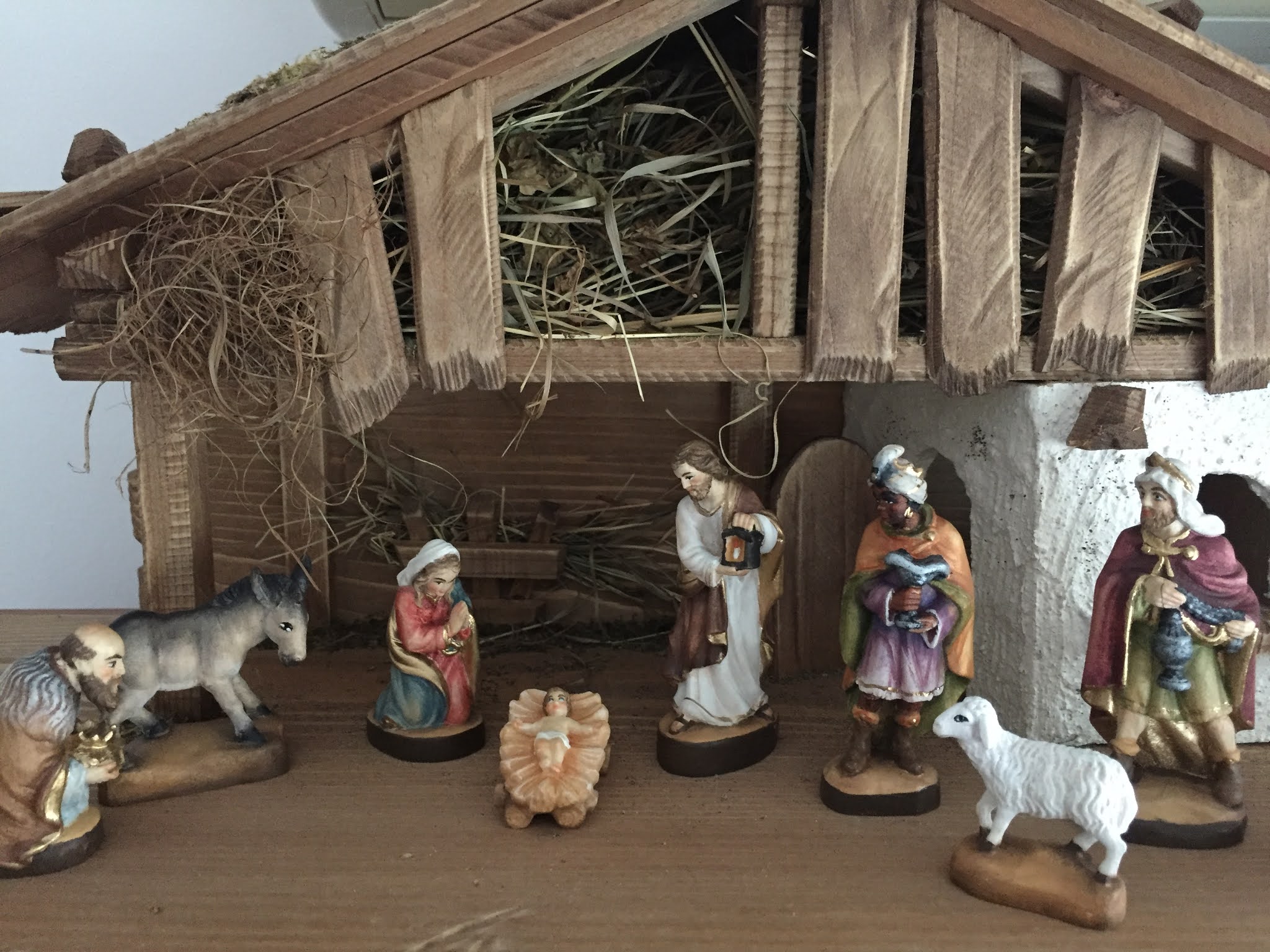
Does Christmas really bring out the best in us? 

As I write this short piece, our small Christmas tree sits atop a small end table. It is wrapped in gold and silver garland. From nearly every branch hangs a meaningful ornament. One of our two strands of lights have gone out this year, but no one seems to mind. It is the variety of ornaments that captures everyone’s attention. 


If you come into our living room and look at our Christmas tree, you may be surprised to find ornaments picturing holy scenes (baby Jesus in the manger), beautiful figurines (a golden Biltmore mansion), handmade items (a felt dove with a ribbon proclaiming “love”), and even silly ornaments (the Chick-fil-a restaurant cow). 


It is a mixture of emotions that arise when I gaze at our tree: joy, nostalgia, hope, peace. The beautiful stillness of the ornaments makes me want to bring such stillness into my own heart, to swallow it and let it become part of me. 


But then I am called back to reality. My daughter yanks my arm, pulling me into the kitchen to pour her more orange juice. My wife enters the room to tell me she slept late, and I’ll need to watch the kids while she gets ready for her online class. The ornaments are left dangling, just like my fleeting moment of peace. 


Does Christmas really bring out the best in us?


In between the thousands of little chores which fill up my day, I glance longingly at the ornaments. What is it about them that calls to me? Am I wishing for the time again when Jessica and I were first married, like in the ornament marked, “Our First Christmas”? Was life really simpler? Did I enjoy Christmas more then? Was I more at peace? 


Jesus came to bring peace on earth, the Bible says. That is, he came to bring peace between the holy God and sinners. The peace Jesus brings is an eternal one. If Jesus had not come, living as a human man, dying for our sins, and rising again on the third day, peace could not be possible.  


As I think about the peace Jesus brings, rightly highlighted all the more at Christmastime, I do find my soul calmed. Even in the midst of a busy and changing life, I find myself opening my heart to a different kind of beautiful stillness. This other stillness, a divine stillness, lasts far longer than one season per year.


“Glory to God in the highest heaven, and on earth peace to those on whom his favor rests.” 

                                                                                                                        -Luke 2:14


Wednesday, December 16, 2020

Honor, Shame, and the First Christmas (Conclusion)

Concluding Reflections

Obviously, these characters are not real. Or are they? I think that, if we allow ourselves to be stretched imaginatively a bit beyond the usual Christmas readings and reflections, we may enter the world of honor and shame in which the Bible was written (and still characterizes that part of the world).

            Although shame clearly surrounded the events of the First Christmas, God was also clearly doing things that transformed that shame into honor. Jerome Neyrey’s Honor and Shame in the Gospel of Matthew highlights how the Gospel writers noted that (1) Jesus came from honorable lineage, being a direct descendant of King David, (2) Joseph and Mary were considered by God to be virtuous, (3) no less than five divinely given dreams (three to Joseph, one to Mary, and one to the Wise Men) affirm Jesus’ unique divinity, (4) “celestial phenomena” occur in the skies in the form of a star and the angelic host, and (5) Old Testament prophecies of the Messiah’s coming were finally being fulfilled.[1]

            Finally, a word on Christmas in our time, during the coronavirus pandemic of 2020. The externals of Christmas look different for everyone this year. Absent are the parties, markets, concerts, and perhaps even church gatherings. The internals of Christmas need not change, of course. By these I mean feelings such as joy, wonder, devotion, and love. Those of us who fight to retain the externals of Christmas ought not shame those of us who reluctantly opt only for the internals. And vice versa.

            One way we can keep the internal fires aglow this Christmas, I think, is to try to consider the Christmas story in fresh ways. That is what I have tried to do here, by looking at the Christmas story through the “non-Western” value system of honor and shame. For the glory of God alone this brief devotional is offered, which is simply another way of praying that God may be honored above all things. 


[1]Neyrey, Honor and Shame in the Gospel of Matthew, 97-101. 

Tuesday, December 15, 2020

Honor, Shame, and the First Christmas Devotional (Part 5: David, a shepherd)

Read: Luke 2:8-20 

Dear Journal,

            My flock wandered over to the east of Bethlehem this afternoon. I guess I shouldn’t say “my flock,” since the sheep actually belong to someone else. They pretty much are mine, I guess, since I’ve seen all of them grow up from when they were newborn lambs. Anyway, the “sheep I tend” wandered over to the east of Bethlehem. 

I usually don’t mind when they want to go closer to another flock, provided the other flock’s shepherds are close by and can identify their sheep from mine. I think it was the singing that got my sheep’s attention, as funny as that sounds.

When the other shepherds came in view, I whistled them over so we could exchange news. It’s usually nice to talk to another human (besides my dad and brother, who shepherd this flock with me). These guys, though, were different.

The first shepherd wouldn’t even let me share my news first, which is, of course, customary for the shepherd who initiates the conversation. Instead, he blurts out, “You will not believe what happened to us last night!” Then he starts talking about angels lighting up the night sky like it’s midday, singing about giving God glory. 

“It was crazy terrifying at first,” added a second guy. “But they told us to go Bethlehem and we’d see the newborn Messiah in the manger of a stable. So, we dropped everything and rushed off.”

“Wait, you just left the sheep and everything?” my brother interjected. “And you went where? To a manger?” The shepherds nodded. 

Until that point, the oldest of the three shepherds had not said a word. Then he spoke. “It was just as the angels said.” The old shepherd had a distant look. I knew he was replaying the whole thing in his mind. Was that a tear I saw in his eye? 

“He’s here,” whispered the old shepherd, almost to himself. “The Messiah. I saw him!”

So, here I am. Under the same night sky that evidently shone last night with angelic light. If this is true, I want to see the Messiah, too!


Monday, December 14, 2020

Honor, Shame, and the First Christmas Devotional (Part 4: Reuben, an Innkeeper)

Read: Luke 2:1-7 

Dear Journal,

            Just returned from the stable out back. I tried to make it as warm as I could. I didn’t tell my wife who the extra blankets were for.

            About an hour or two ago, a young couple appeared at my door asking for a room. “You’re too late,” I said, “We’re all full tonight. Census time, you know.” The girl looked like she was going to cry. When she silently stroked her belly, hidden up to that point by a large woolen cloak, that’s when I knew. What could I possibly do? My wife and sons were already asleep, so they couldn’t share our room. Especially not if the girl was that far along. Besides, everyone will know tomorrow what happened, anyway. It’s hard to hide that turning away a seriously pregnant woman.

            My wife was about her age when she gave birth to our firstborn. “All I have is a stable.” The girl’s eyes met mine. “Follow me,” I said.  

            I don’t know what I’ll say to my wife and sons when they hear the girl’s cries if she gives birth tonight. What kind of a person is born in a stable?